Wednesday, January 03, 2007

Happy 2007!


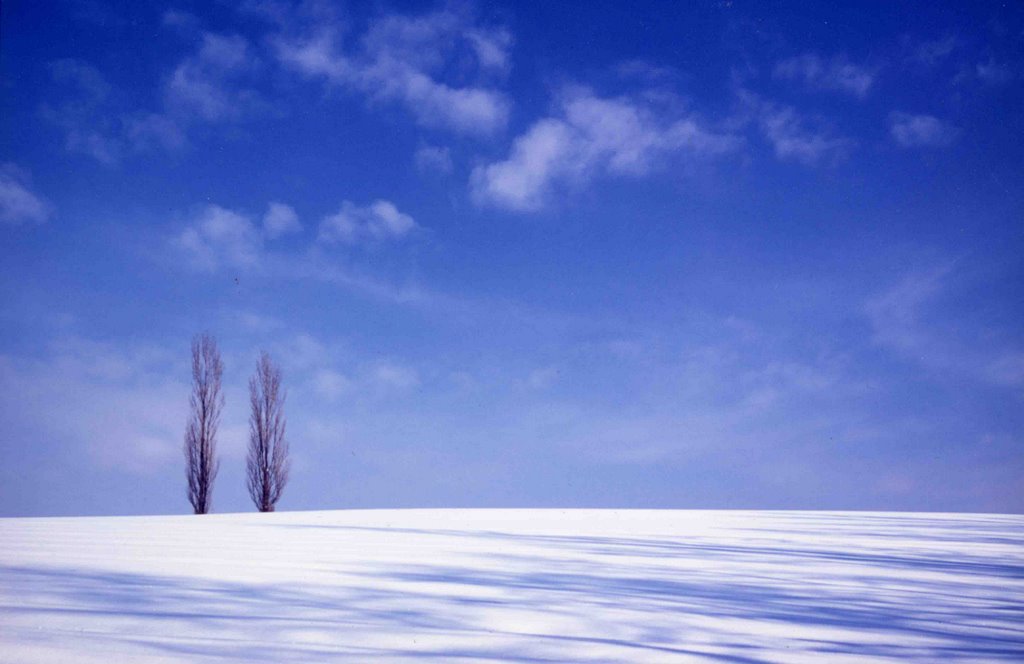
A Happy New Year!

Jan. 1, 2007


(at Biei, Hokkaido)

Tuesday, December 26, 2006

Thank you, Hikawamaru and Marine Tower

Hikawamaru is an ocean liner that made its maiden voyage in 1930. Marine Tower is an observation tower having a beacon function. These two, being located at or near Yamashita Park, have been the symbol of Port Yokohama since 1961, 100th anniversary of port opening. But they were closed on December 25. In recent years the amusement area was moved to Minato Mirai 21 area and the number of visitors to these two places decreased.

It was Hikawamaru that I visited first when I moved to Yokohama. It'll be sad to say goodbye.


It was decided that Marine Tower was bought by Yokohama City and would be reopened a couple of years later. What become of Hikawamaru?


Monday, December 25, 2006

Autumn Colors in Kyoto

I have received an unexpected X'mas present from my friend, Yu-kun. At the end of last month he visited Kyoto and taken pictures of autumn colors. He visited Shozan Garden in the north and Komyoji Temple in the west of Kyoto.

More photos can be seen in my Web site. Please access:
http://www.realjapan.org/photo/Kyoto2006Autumn/index.html


(Shozan Garden)

(Shozan Garden)

(Komyoji Temple)

(Komyoji Temple)

Saturday, December 23, 2006

Tokyo Tower

With 333 meters in height, Tokyo Tower is the highest construction in Japan. It was the same day in 1958 that the Tower was opened.

Since last year a movie and a novel related with Tokyo Tower gained popularity across the country. “ALWAYS san-chome no yuhi (3-chome’s Sunset)” represented everyday life and human kindness in a downtown Tokyo around 1950’s. “Tokyo Tower”, with a subtitle “okan to boku to tokidoki oton (Mom and I, and sometimes Dad)” is a semiautobiographical novel of a young man coming into Tokyo from the country, containing mom’s plentiful love.
Tokyo Tower was the symbol during booming postwar economic growth.

At the top of the Tower there are analog and digital TV antennas; the increase of the high-rise buildings push up the TV interference these days. To reduce the interference, a New Tokyo Tower Plan was started. They say it requires more than 600 meters high. I wonder it would be a cat-and-mouse game.


(Tokyo Tower and Raindbow Bridge)

(Light-up at 16:00)

(From Zojoji Temple)

Gazing up from the bottom)

(Cherry Blossom Season)

Tuesday, December 12, 2006

Sukiyaki Story

It’s kind of weird that the Japanese have not eaten meat for a long time.

I hear that it’s late Jomon period that rice growing was delivered to Japan. At that time they had eaten venison and boar meat. But meat eating seems to have been exchanged in order to develop rice growing.. In 675, the ancient imperial court issued a meat diet prohibition law. For example, during rice growing works, the meat eating was prohibited to pray for a good harvest or the killing of animals was prohibited in the year of opening the eyes of the Great Buddha. Rice is sacred and meat is dirty; such an idea was gradually implanted. Even in Buddhism temples monks abstained from eating fish and meat.  Of course there are the documents mentioning that meat was eaten in secret or in the case of lean crop, I hear.

Around the end of Edo era, Western cuisines were introduced. But at first ordinary people could not get used to Western cuisines using meat. Then, various kinds of things were done to enjoy meat. Traditionally the Japanese are excel at such things. One of them was gyu nabe (or sukiyaki). (Sukiyaki is beef and vegetables flavored with soy sauce and served in a pan.) Beef was flavored with soy sauce and fermented soybean paste (later changed to sugar) which were basics of Japanese cuisine taste. During Ansei period of Edo era, Yukichi Fukuzawa and others had already tried this food. In 1868 a person named Otomatsu Takahashi living in Edo started to sell it in the name of “sukiyaki.” This is the debut of sukiyaki.

In 1873, Meiji Emperor tasted beef cuisine (I don't know what kind of cuisine Emperor had), and after that gradually meat has become popular for the reason that it is a good food. People received the official go-ahead.

Eat meat with beaten egg. Try to taste Japanese sake together.


Monday, December 11, 2006

Saturday, December 09, 2006

Japan Sports 2006

The striking players this year are Arakawa, Ichiro, and Nakata.

Arakawa not only gave Japan the first gold medal at female figure skating, Torino Olympic, but also her beautiful performance impressed Japanese people. Her special skill, “Ina Bauer” won the grand prize of the buzzwords-of-the-year contest.

At the World Baseball Classic 2006, Japan became world champion. Ichiro was a leader of the team. He ranked top class also in the Major League, and he is always challenging. Nakata did his best by his own style to encourage the team at World Cup 2006. He carved his way at soccer clubs in Europe and gave younger people a chance. Immediately after the World Cup he retired as he had decided and he went a self-searching journey. Baseball and soccer are popular sports in Japan. I think Ichiro and Nakata’s lifestyle itself greatly influences the lifestyle of young people.

(At Harajuku)

Wednesday, December 06, 2006

Autumn Colors at Kamakura

Samurai Governor, Yoritomo Minamoto, established Bakufu (feudal government) at Kamakura, which was a place easy to defense and difficult to offense. There is a sea at the front and a mountain at the back. There are many temples and shrines remained. So, it can be said that Kamakura is the harmonious town of landscape and history.

Kamakura is now the season of autumn colors of leaves.


(Maple Trees at Shishimaigayatsu)


(Ginkgo Leaves at Shishimaigayatsu)

(Kakuonji Temple)

(Tsurugaoka Hachimangu Shrine)

Saturday, December 02, 2006

Autumn Colors at Shinjuku Gyoen National Park

We can enjoy autumn colors also at gardens and parks. There is the metropolitan government building at Shinjuku, which is changing itself without stopping. In front of the Shinjuku station some construction is progressing. But Shinjuku Gyoen National Park always receives us with quietness and beautiful flowers and trees.


Friday, December 01, 2006

December (Shiwasu)

December is also written “monks run” in Kanji characters and pronounced “shiwasu.” This is derived from the meaning that monks are so busy that they run to visit many houses to recite a sutra.

Every family is so busy preparing for the New Year, such as cleaning, writing New Year’s cards, preparing for the New Year’s dishes, etc. The Japanese have a custom of doing a general house cleaning at the end of the year.
On New Year’s Eve, people eat toshikoshi noodles and say goodbye to the old year, hearing the bell. The tradition of eating noodles seems to have become popular during Edo period. I wonder that it is a Japanese noodle restaurant that got the idea of eating noodles on that day.

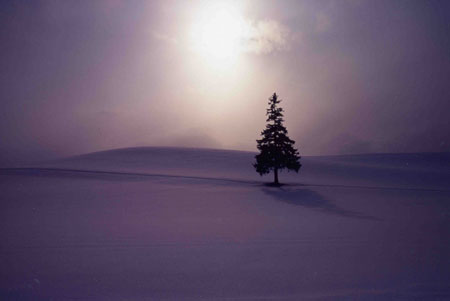
Before December comes, the whole city has that Christmasy feel to it throughout Japan. It's curious, but it's there nonetheless.


(Christmas Tree in Biei, Hokkaido)

Tuesday, November 28, 2006

Autumn Colors in Korankei

Korankei is located in Aichi prefecture, famous for autumn colors.
It is said that during Edo period a resident priest of the Kojakuji temple for the first time planted a maple tree around the temple and continued to plant a tree every time he read a volume of sutra. After that people added maple trees. Now 4,000 maple trees produce beautiful autumn sceneries.


[Tips]
Three Major Autumn Color Sites in Japan:

  • Nikko, Tochigi pref.
  • Arashiyama, Kyoto pref.
  • Yabakei, Oita pref.

Sunday, November 26, 2006

Holiday in Autumn

Many families go viewing autumn color on holidays in this season. The following pictures were taken in Showa Kinen Park yesterday. The Park was built after the U.S. military base in Tachikawa.


Friday, November 24, 2006

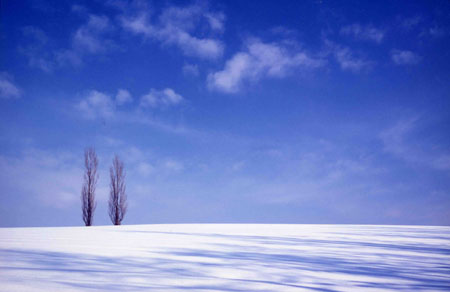
It Is Already Snowy in Hokkaido.

As Japanese archipelago extends north and south, it is already snowy in Hokkaido, when the foliage season has just started in Yokohama.

There are various winter sports, but it is fantastic just to view the snowy sceneries. All are on Biei Hills.


Thursday, November 23, 2006

Labor Thanksgiving Day

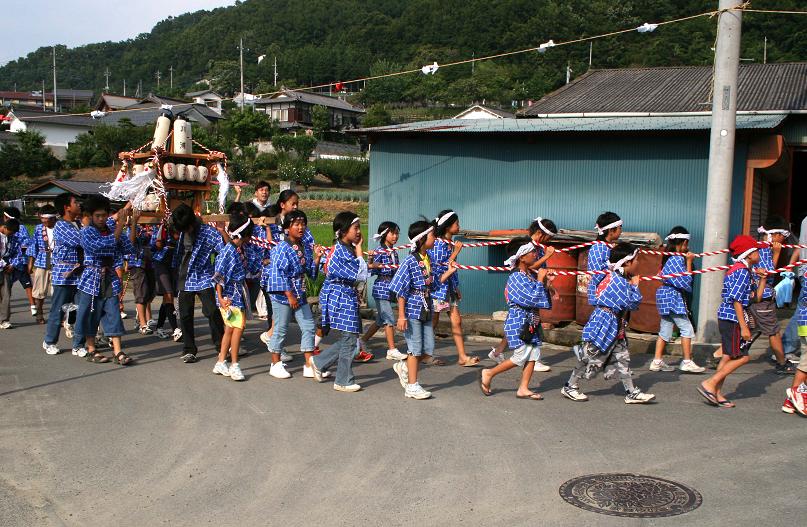
November 23rd is Labor Thanksgiving Day in Japan. Traditionally November 23rd was called “Niinamesai” (a kind of harvest festival), when the Royal family perform a ceremony to thank for affluent harvest by offering the harvest of the year. This tradition is still preserved. The Emperor of Japan plants rice at the paddy field in the imperial residence in May as “Otaue” and prays for the productiveness of grains. Since Yamato dynasty, the emperors’ policy has greatly affected the expansion of rice growing in Japan and the fact that the Japanese became to live on rice. We should thank that they could find that rice matched with various climates in Japan.

After World War II, such a day was established as Labor Thanksgiving Day to encourage people to value labor, celebrate production, and give thanks to each other. In the old days, children were taught to eat boiled rice, thanking to farmers. Nowadays, the number of workers engaged in the primary industry was reduced to occupy about 5%. It might be amazing that such a small part supports the staple food in Japan, though. Now, children are taught to thank to working fathers and mothers; no special events are performed at home. In many rural areas, they preserve the traditions to celebrate the autumn festivals to thank for the productiveness. Those correspond to the western thanksgiving.

Recently Halloween party has become popular in Japan; it seems the same as Christmas. They are very good at adopting Western customs.


(Children Carrying a Portable Shrine at Rural Festival)


(Harvesting Rice)

Wednesday, November 22, 2006

Happy Couple Day

Today is Ii-fufu-no-hi (Happy Couple Day). It is said that this was proposed and introduced in 1988, but not so popular. The naming is derived from the sound of Novemver (11) 22; 1 is pronounced ichi in Japanese and 2 is pronounced futatsu or fu. A happy couple is the base of happy family. This is a campaign for married couples to promote more relaxed life and good communication.

Recent years divorces are increasing in Japan, from 96,000 in 1970 to 270,000 in 2004. “Vintage year divorce” (Jukunen Rikon in Japanese) is one of the buzzwords. Japanese society is aging and experiencing a declining birthrate; husband-wife hours will be increased. Today’s paper says, according to one questionnaire, twice as many wives as husbands are not pleased to have more time with their partner after retirement. Anyway women enjoy green old age.


(Happy Couple in Biei, Hokkaido)

Tuesday, November 21, 2006

Kamakura, the Ancient Capital Built by Samurais

Today I visited Kamakura to see how the leaves are changing the color, especially at Shishimai Trough, my best spot for autumn viewing in Kamakura. It’s early. This year it has been warm and sometimes it was raining heavily and the wind was blowing hard. Many gingko leaves at Shishimai Trough have fallen down before turning yellow. Maple leaves are still green; I am looking forward viewing the maple leaves turning red.

I strongly recommend the foreign tourists visit Kamakura. The reasons are:
1) Near from Metropolitan Area (One-hour train)
2) Atmosphere of Ancient Capital (There are many temples, shrines, and historical sites.)
3) Variety of Places; Hills, Island, and Sea (There are several hiking courses with beautiful sceneries.)

Do you know who is the first Samurai Governor of Japan? Answer is:
>>>> Yoritomo Minamoto

I will briefly explain why samurais come out.
In 10th century it became clear that the ancient governance by the Emperor was imploding. Local ruling families were developing and increasing their land. They armed for protecting their land. There were disputes between them and the local government. Some of the noble families who were appointed as a local officer continued to live at their post after their term expired. They were gradually growing to make a samurai group. Understand?


(Today's Gingko at Hachimangu Shrine)

(Gingko at Shishimai Trough)

(Maple Tree at Shishimai Trough)


(Face)

Monday, November 20, 2006

Miyajima (or Itsukushima)

Miyajima is one of Japan’s three most beautiful spots. Itsukushima Shrine and the surrounding sea and primeval forest were designated as a World Cultural Heritage in 1996.

About ten-minute boat from Miyajimaguchi takes us to the island. A red-painted shrine gate standing in the sea surprises us and makes us feel like coming to another world.
Within Itsukushima Shrine, we have to take one-way route, but we can tour at a leisurely pace. Also you can realize that the shrine is built in the sea. When I visited there, I got up early in the next morning and went to the shrine gate. I could reach the gate on foot. Do not forget to check the time of greater ebb.

There are a lot of deer in Miyajima. People take good care of deer, because deer has been considered a divine messenger. How friendly! You will be surprised to see them here and there. On the top of Misen there are a lot of monkeys. They are not friendly; be careful.
If you visit in autumn, you can further enjoy autumn colors. I recommend a walk around Momijidani Park.

If you are going to stay in Miyajima, you should know that there are no convenience stores there. Most stores are closed around 6 p.m. I had reserved only accommodation. As the owner introduced me a couple of restaurants, I was able to have a dinner. My breakfast was momiji-manju. I bought it at a souvenir shop that was open early in the morning for tourists. Momiji-manju is maple-shaped bun with bean-jam filling and specialty of Miyajima. Another specialty is oyster. You can see the oyster bed from the boat. Try to eat various oyster dishes. I can never forget kaki-no-dotenabe (oyster-in-pan dish dressed with miso sauce) and Suishin (Hiroshima’s sake) that I had at Hiroshima Station.


(Red-painted Shrine Gate)

(Shrine Gate at Greater Ebb)


(Dear Deer Couple)


(Oyster Bed)