Showing posts with label Flower. Show all posts

Tuesday, October 10, 2006

Cosmos

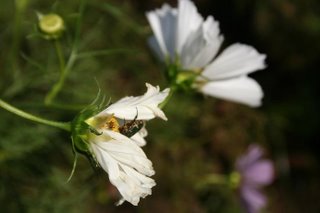
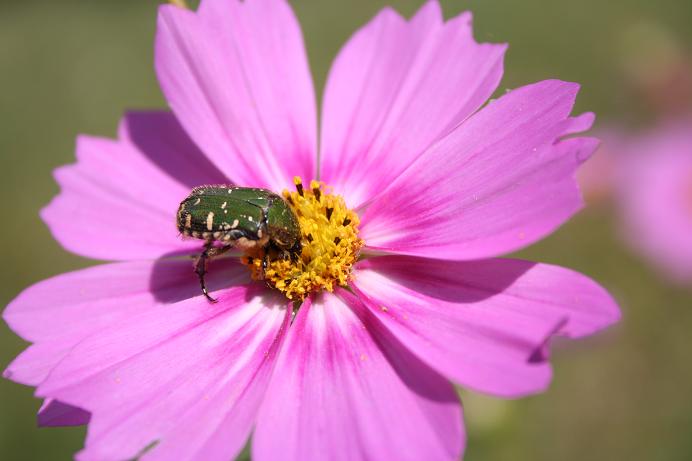
There is a flower garden filled with cosmos in the southern part of Kanagawa prefecture. It is a Kurihama Hana-no-kuni (=flower country). I was looking forward to seeing beautiful flowers, but a lot of stems were damaged by the recent gale and heavy rain. What interested me was something different. Those are:


On October 22, a picking event will be held. You can pick the flowers of cosmos. Don’t forget scissors and a large bag.

Monday, September 25, 2006

Lycoris Again!

Lycoris is called “higanbana” in Japanese, because it blooms around fall higan. Higan is Buddhist ceremony cerebrated during fall equinoctial week. They say in the old days lycoris was used as food in the case of famine, since the bulb is starchy. That may be why Lycoris is usually seen around paths between rice fields.

Today I went to Hinata-yakushi, the countryside of Kanagawa prefecture. It took about 30 minutes by bus from Isehara station of Odakyu line. A lot of aged people came to see higanbana. Some farmers are just harvesting rice.


Wednesday, September 20, 2006

Lycoris

It was the second time that I visited Kinchakuda. Kinchakuda means a rice field in the shape of drawstring bag, which was formed by the Koma river snaking through. It is now famous for lycoris in clusters. A scientific name is lycoris radiate. Flaming red flowers!

The nearest station is Koma, which was named for Goguryeo. In the old days, people who moved from Goguryeo had settled down.

I hear they started to make a charge for admission of 200 yen last year. They were very friendly.


Monday, July 24, 2006

Biei Full of Flowers

I was visiting Biei again. Now it was full of flowers, especially lavender in full bloom. The weather was not so good; sometimes I was caught in a shower. But I was able to enjoy a three-night travel very much, because there were unexpected encounters with several people who are deeply attached to Biei. They were kind enough to take us to some places by their car. I had borrowed a bicycle to go around Biei town and hills. Just riding a bicycle to a pension on a hill had made my knees quiver. This wasn’t how it was supposed to be.
Fields and crops on the hills are what farmers raised with loving care. We can enjoy eating freshly-picked vegetables at lodgings.


(Colorful Garden at Farm Tomita, Nakafurano)
(Everyone Takes a Shot!)

(Trees and Potato Field, Biei)

Thursday, July 06, 2006

Summer Image, Japanese Morning Glory Fair

Every child has an experience of growing the morning glory at a primary school in Japan. At Iriya, an old town in Tokyo, near Ueno, a Japanese morning glory fair, one of the summer images, has started today. At the narrow sidewalk and the precinct of Shingenji Temple, more than fifty stalls were set up.
According to a brochure, morning glory flower was carried down as a drug by a Japanese envoy to China in the Tang Dynasty. Growing morning glory flowers for visual effect became booming during Edo period. In Meiji era, Iriya became famous for morning glory and the flowers were displayed and sold, but all the gardeners closed a business by the beginning of Taisho Era. The fair revived after the War.
Popular is “Danjuro”, whose color is the same as that of the famous Kabuki actor, Danjuro Ichikawa. I bought one pot having four kinds of colors. It costs 2,000 yen. I felt rather expensive. I selected a stall which uses eco-friendly pots. I will be able to enjoy the flowers till the beginning of November.


(Precinct of Shingenji Temple)

(Stalls at the Sidewalk)

(Sellers' Own Costumes)

(I Will Help to Water Flowers.)

(Danjuro*)

*The pure Danjuro seems to have no while edging.

Thursday, June 29, 2006

Hydrangea’s Temple

Near Kita-Kamakura station there is a temple called Meigetsuin. It is famous for hydrangea. Even on weekdays it is very much crowded in this season. They say they are cultivating blue hydrangea. The pictures were taken a week ago.


Saturday, June 17, 2006

Early Summer of Suigo (Water Village)

In Kanto Region there is the Tone River whose basin area is the largest in Japan. The border area between Chiba and Ibaragi prefectures is called “Suigo” and has a wide paddy field zone. In Edo period the area flourished in water transport connecting Tohoku Region and Edo. A boat called “Sappa-bune” used to be an intra-regional transport means for the people. Also at marriage, they used to pole a boat.
In Sawara Aquatic Botanical Garden, they recreate the marriage boat in the iris season. A couple chosen for this day had a wedding ceremony here, receiving a blessing from a large audience.


(Irises at Aquatic Botanical Garden)
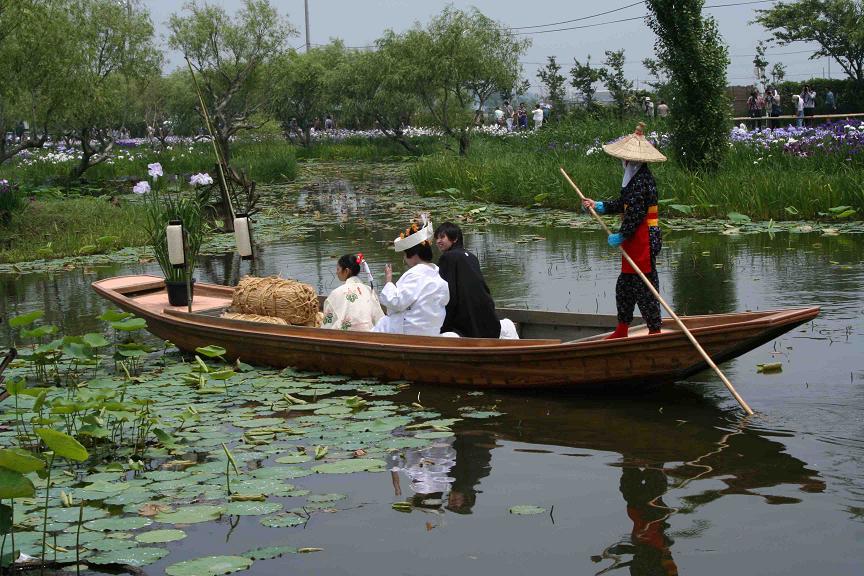

(Marriage Boat)

Saturday, June 03, 2006

Coming of the Skunk Cabbage Season

I went to Oze to see the skunk cabbages. Oze is one of the RAMSAR sites in Japan and a popular moor with the tourists. Various activities are carried out for the preservation of the Oze moor. This was a tour using a night bus. The bus leaving Shinjuku at 23:00 on Friday arrived at Hatomachi Pass in Gunma prefecture after 5:00 next morning. As there was much snow this year, it is said that flowers bloom later than usual. It was a good time to visit there; white skunk cabbages welcomed us. Next week will be a full bloom. Board walk is prepared for tourists in this area. We walked on the remaining snow and then on the board walk. I slipped and fell on my rear, as I had feared. Oze after an almost 20-year absence was not gentle to me.

About Oze:
http://www.env.go.jp/en/nature/npr/ramsar_wetland/pamph/pdf/16.pdf


(Mt. Shibutsu and Skunk Cabbages)

(Skunk Cabbages)
(Mt. Hiuchigatake and Tourists)

Sunday, April 30, 2006

How to Cook Crabs

Yesterday I joined a shooting tour. We went to a harbor and a seashore park in Ibaragi prefecture by bus. Japanese eat a lot of sea food; there are a lot of fishery harbors along the shoreline. A fishery harbor is said to be a good photographic subject.
The fish market near the harbor was lively and crowded with families. When I found a lot of fresh crabs, they reminded me some event. Several years ago we visited Hakodate in Hokkaido and at the early-morning market I bought a live crab as a brisk voice recommended it for me. Our children like crabs. After we returned home, I boiled a crab in a large pan. Our children saw the crab struggling out of the pan and said that it was cruel to a crab. Then I thought I would never boil a crab again.
But yesterday there was a message saying “steam crabs.” I asked which is more delicious, boiling or steaming. He answered steaming is more delicious. Steam them in salty water. It will not be watery. If so, it is unnecessary to see a crab dying. Anyway it is delicious to eat crabs just after boiling or steaming.
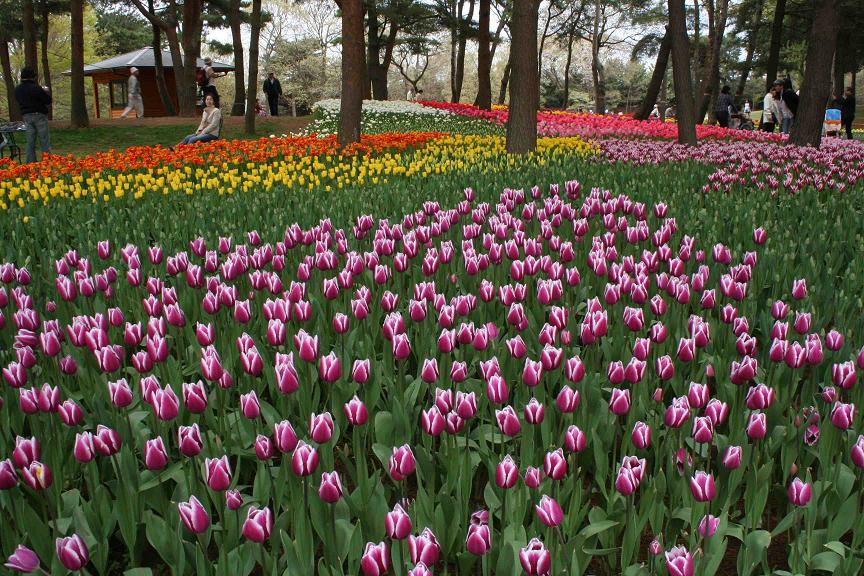
Then, tulips at the seashore park were colorful and in full bloom.


Sunday, April 09, 2006

Cherry Forest

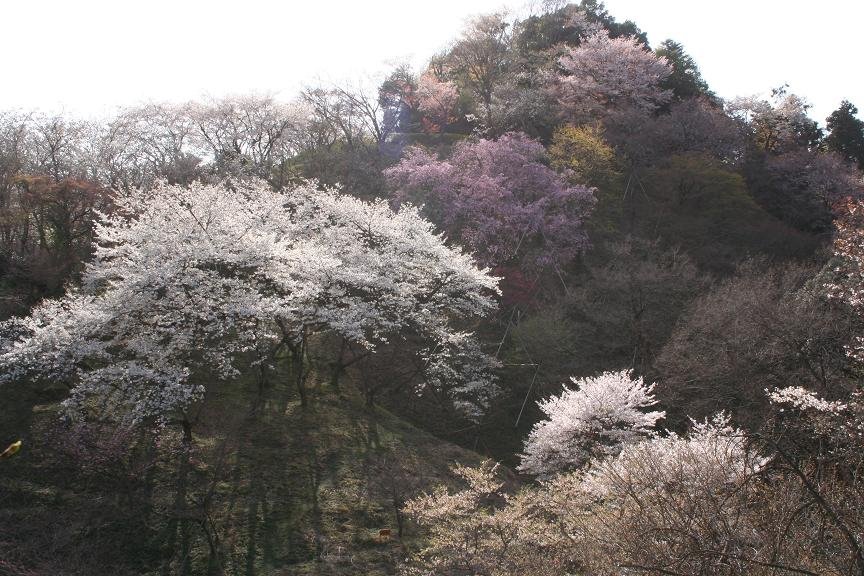
I have wanted to visit here for a long time. Tama Forest Science Garden is a 10-minute walk from Takao Station. They say the forest has about 2,000 cherry trees of around 250 different types. The preservation forest was built to leave the DNA of the cherry trees well known nationwide. We can enjoy cherry blossom viewing from the end of February to the beginning of May. Admission fee is 4oo yen in April, higher than usual 300 yen, but it’s worth the money to view cherry blossoms.

Access the URL below for more photos:
http://www.realjapan.org/

Saturday, April 08, 2006

My Best Shot Last Year

It was windy today. I was at home, planning where to go tomorrow.
The following photo is my best shot among last year’s cherry blossoms:


(Ookagawa River, Yokohama)

Friday, April 07, 2006

Kamakura

Today’s course was too hard, because I knew it’s a little late for its full bloom.
Engakuji Temple ====> Tokeiji Temple ====> Kenchoji Temple ====> Tsurugaoka Hachimangu Shrine
====> Dankazura Avenue ====> Kamakurayama

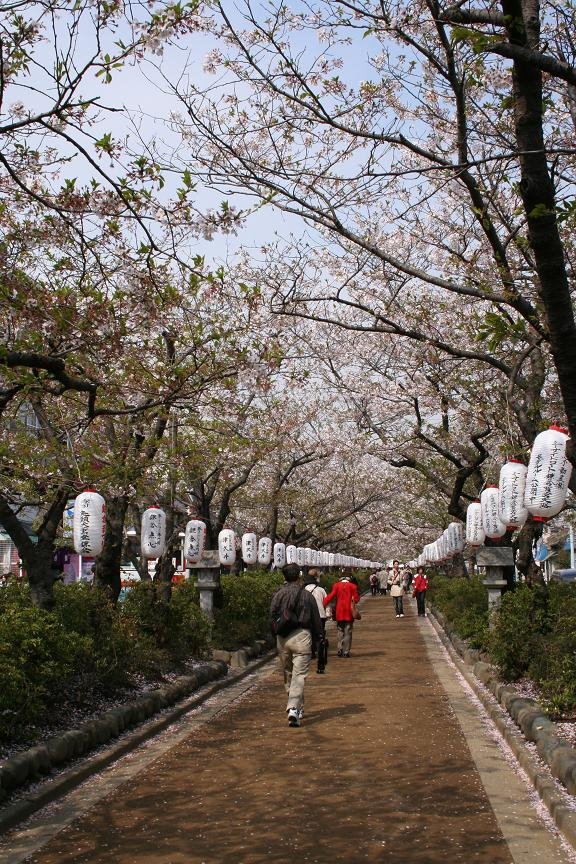
Cherry blossoms began to fall, but many people including foreign tourists were enjoying cherry viewing. Dankazura Avenue is a path leading to Tsurugaoka Hachimangu Shrine and is like a tunnel of cherry trees. In Kamakura era the Shogunate, Yoritomo Minamoto commanded to build it for wishing his wife, Masako a safe delivery.

Do not trust the magazine or Internet information completely. Some magazines recommended Kamakurayama as a nice cherry viewing spot. It says a tunnel of cherry trees extends about 3 km. I visited there for the first time with great expectations. Expectations are disappointed. Cherry trees were arranged sparsely and some of them seemed to be private trees. We cannot complain because the tree owners leave us to view the trees free of charge.

Access the URL below for more photos:
http://www.realjapan.org/


Thursday, April 06, 2006

Ueno Park

Ueno Park is the most famous cherry blossom viewing spot in Japan, I think. There were a lot of foreign tourists visiting there today. Ueno Park is suitable for the cherry viewing party. As the Internet information of the cherry blossoms provided, those at Ueno Park have begun to fall. But there were many people viewing cherry blossoms. There is a big pond called Shinobazu-no-ike in the park. The pond is famous for lotus flowers in early summer. There are many ducks swimming in the pond. The other day TV news said some ducks were found to be shot by arrow. That is an unforgivable act.

After Ueno Park, I went to Sumida Park. A cherry boulevard lines at both sides along the Sumida River. Some people are viewing cherry blossoms on a barge.

Access the URL below for more photos:
http://www.realjapan.org/


(Ueno Park)

(Sumida River)

Friday, March 31, 2006

Mitsuike Park

Mitsuike Park is located at the northern part of Yokohama. In the Part there are three ponds (mitsu=three and ike=pond), which were used to irrigate rice fields during Edo period. It was warm today. I bought lunch at a basement food floor of a hotel near the station. Today’s lunch was 500 yen, half of the yesterday’s lunch, but it was delicious enough. I was satisfied to have lunch viewing cherry blossoms.


Thursday, March 30, 2006

Hanabie

It was Hanabie today. Hanabie means cold in cherry-blossom time. (Hana means a flower (= cherry blossom) and b(h)ie means cold. Since the climate of this season is not stable, it sometimes gets cold temporarily.
Despite Hanabie, we went out for cherry blossoms. The Ooka River is one of the nice spots for cherry viewing in Yokohama. We bought lunch at a depa-chika (basement food floor of a department store). Boxed lunches at a depa-chika are in big demand. We were going to eat lunch viewing cherry blossoms, but it was too cold to eat there. Sadly we had lunch at a bench at a subway station.

Access the URL below for more cherry photos:
http://realjapan.org/

(The Ooka River)

Wednesday, March 29, 2006

Spending All Day Viewing Cherry Blossoms (2)

Today’s Course is:
Jindai Botanical Gardens ---> Inokashira Park
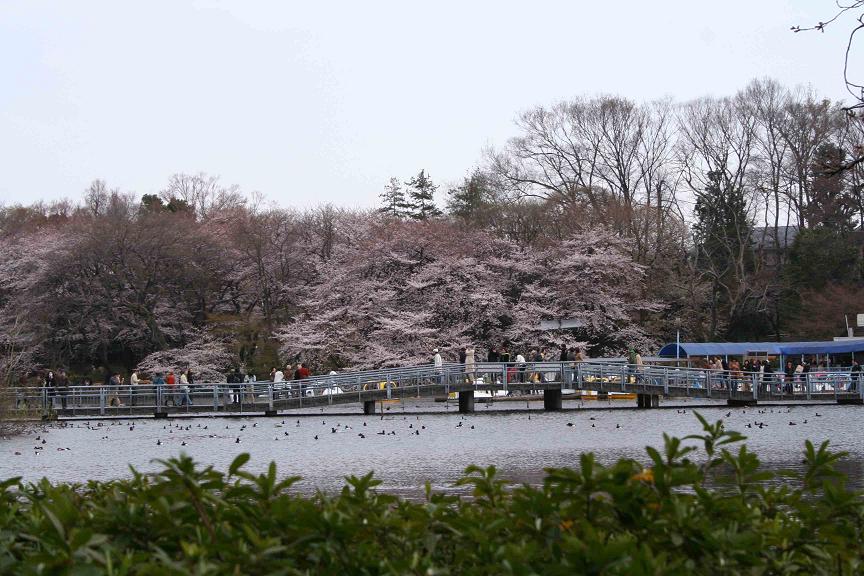
Today I have also spent all day viewing cherry blossoms. Inokashira Park is quite an amusing place, where some musicians were playing and singing and some artists were drawing pictures. Of course a lot of people were preparing a night viewing of cherry blossoms. I longingly recalled that I took a boat ride with a boy friend here a long, long time ago.
Access the URL below for more cherry photos:

http://realjapan.org/

(Jindai Botanical Gardens)

(Inokashira Park)

Spending All Day Viewing Cherry Blossoms

Today’s Course is:
Shiba Park ---> Zojoji Temple ---> Yasukuni Shrine ---> Chidorigafuchi Park ---> Kitanomaru Park
I have spent all day viewing cherry blossoms. I was so tired that I have just entered Kitanomaru Park. The following photos show the atmosphere of these places. The photos of cherry blossoms are posted on my Web site. Access the URL below.
http://realjapan.org/photo/Cherry/cherry.html

(Chiba Park)

(Zojoji Temple)

(Yasukuni Shrine)


(Chidorigafuchi Park)

(Kitanomaru Park)

Monday, March 27, 2006

Weeping Cherry Trees at MishimaTaisha Shrine

Weeping cherry trees (shidare-zakura in Japanese) at Mishama Taisha Shrine is famous and is now in full bloom. Mishima Taisha Shrine is located at Mishima city in Shizuoka prefecture.
My friend, Hirochan has sent some photos of Mishima sakura. I guess you would like to see the real one.


Blooming 30%?

When I take a walk every day, I have an unexpected discovery. Young cherry trees produce flowers earlier than old ones. I think this might be due to DNA. There seems to be the stronger will to leave progeny.

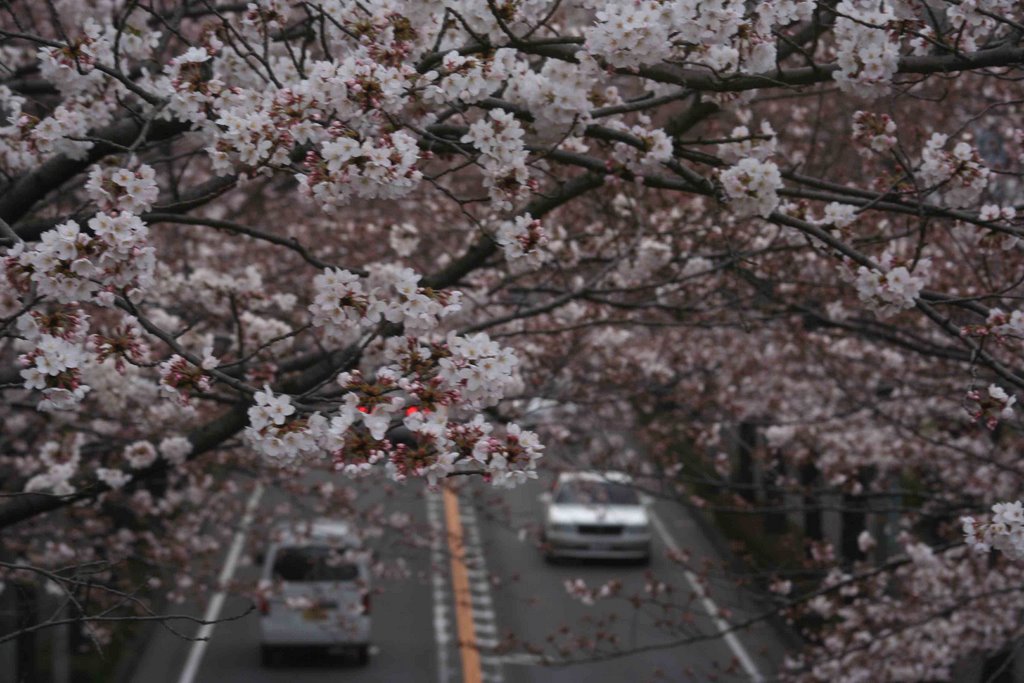
(Tunnel of Cherry Blossom Trees)


(Floral)

Sunday, March 26, 2006

Somei Yoshino

Most popular sakura is Somei Yoshino. It is said that Somei Yoshino was developed at Somei village (in Tokyo) around the end of Edo Period (19th century) by marriage of prunus and yedonensis. Pale pink blossoms bloom in unison before leaves come out. It is also beautiful that petals are flapping in the wind.
Last April I went to Kyoto for Cherry Viewing. That was the first time for sakura in Kyoto, but unfortunately it was cloudy and rained occasionally.


(Today's Sakura)


(Kiyomizu Temple in Kyoto)