Showing posts with label Rice. Show all posts

Thursday, May 17, 2007

Terraced Paddy Field (Tanada)

There is a small flatland in Japan, so our ancestors put their efforts into the expansion of the field. It is “tanada,” terraced paddy field, that they made it possible. Very, very hard work! There were a lot of terraced paddy fields throughout Japan, but it has become difficult to keep rice growing there, because of the decrease of agricultural population and the aging problem.

On the other hand, the beautiful scenery of tanada gives us healing and reminds us of “Japanese spirit.” In recent years some people started to help the rice planting work on terrace voluntarily. I think tanada is one of cultural assets in Japan.

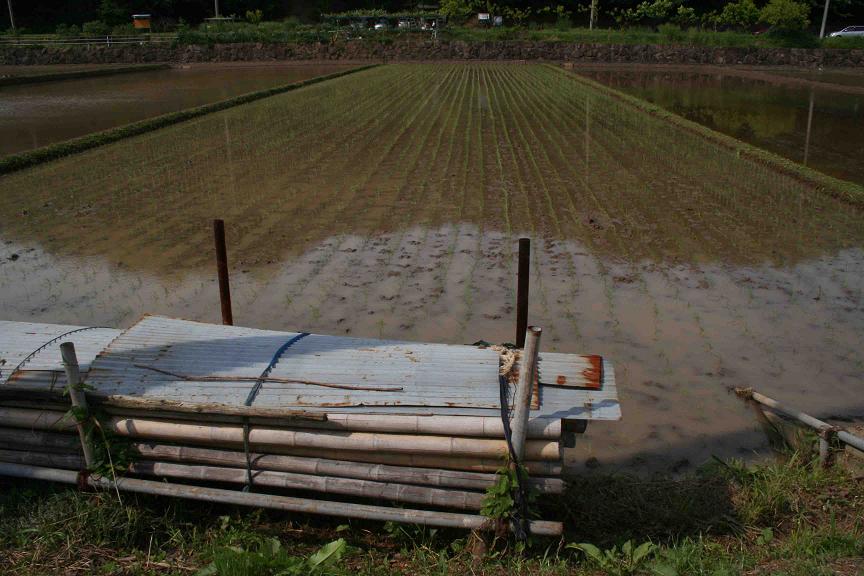
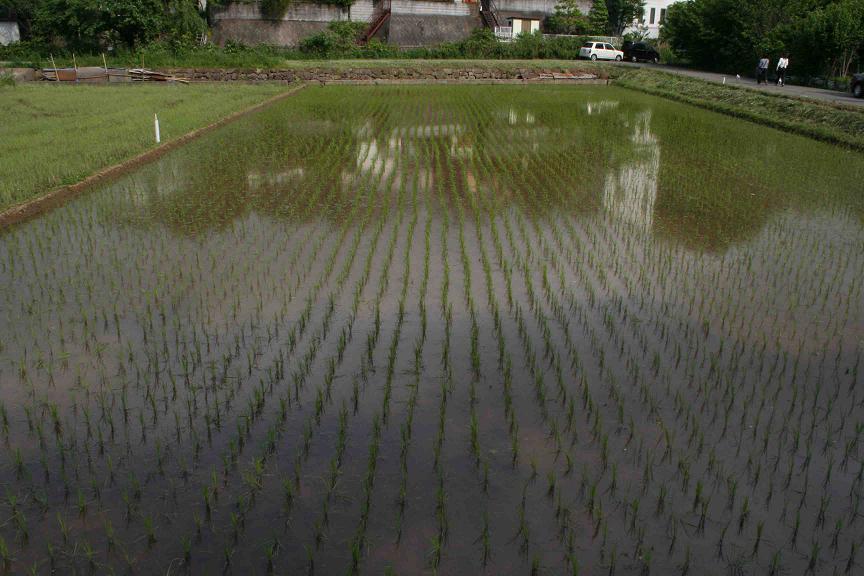
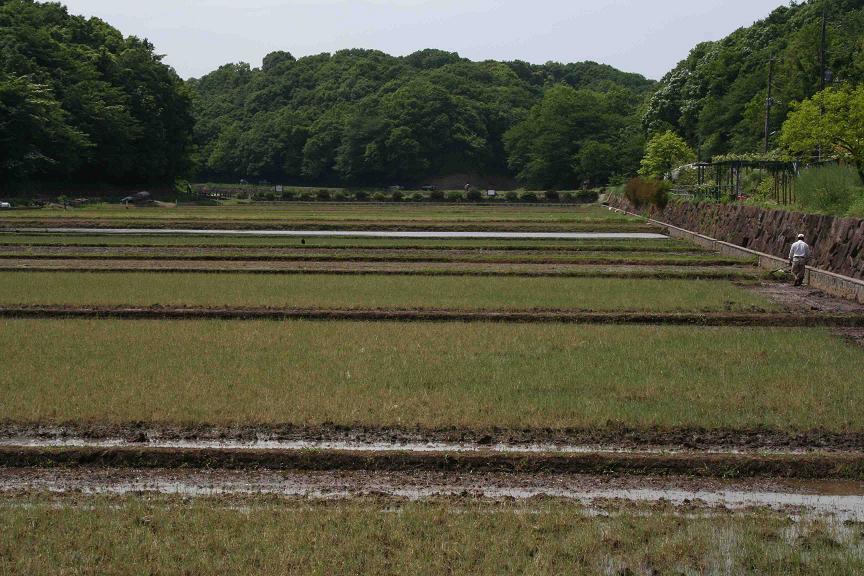
Yesterday I visited terraced paddy fields at Hayama in Miura Peninsula. They are small paddy fields. Five farmers are engaged in those fields.
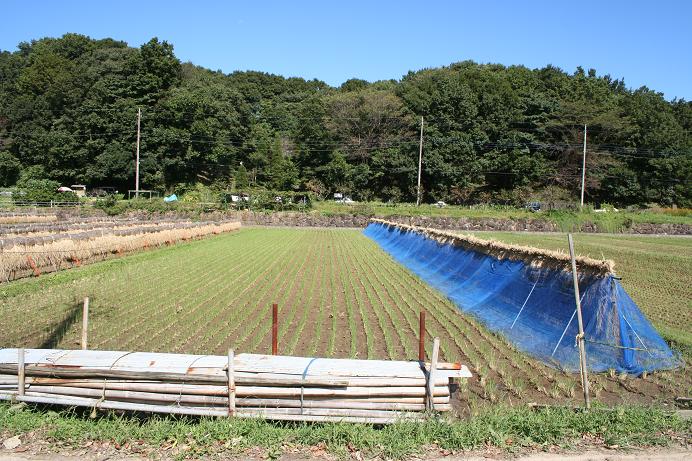
This is a panoramic view.


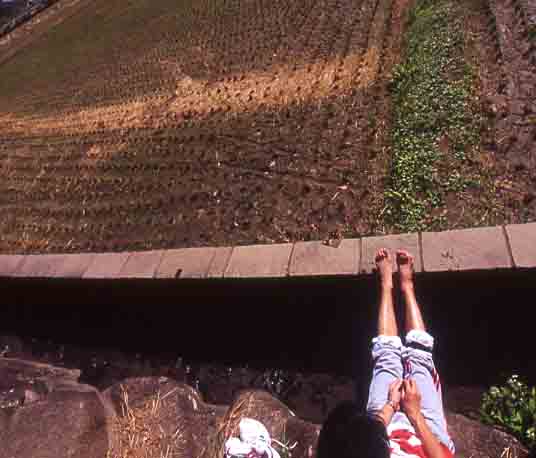
This is a picture seen from the bottom.

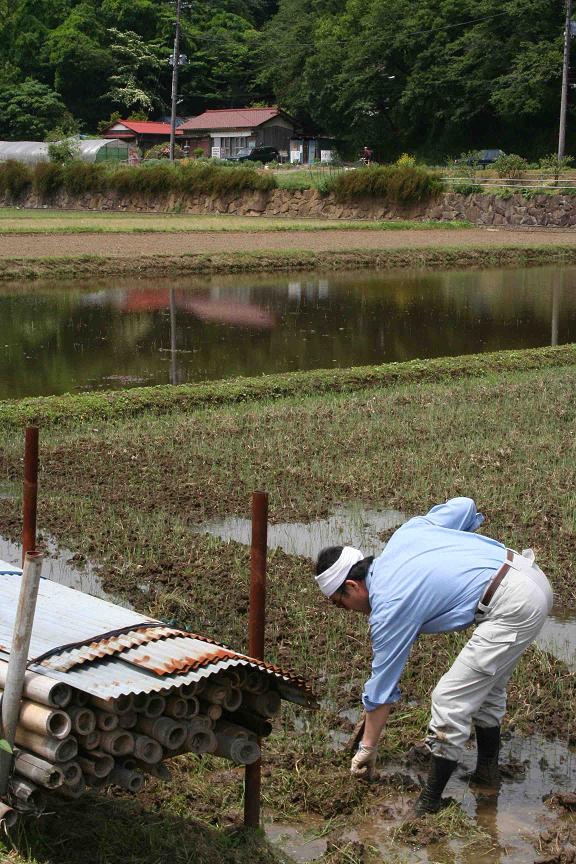
Three farmers were working in grass cutting before rice planting.


These three farmers were classmates.


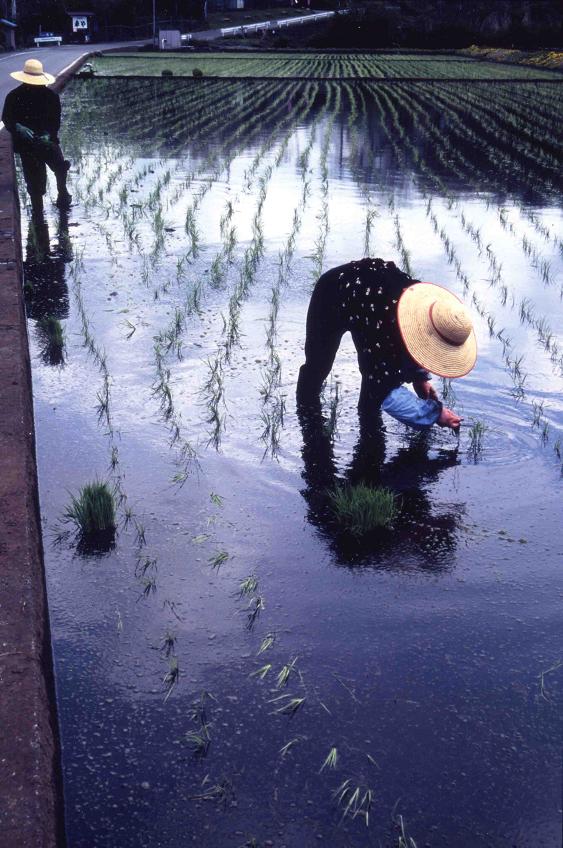
The picture below is tanada at Asuka in Nara which I visited in April.

Thursday, November 23, 2006

Labor Thanksgiving Day

November 23rd is Labor Thanksgiving Day in Japan. Traditionally November 23rd was called “Niinamesai” (a kind of harvest festival), when the Royal family perform a ceremony to thank for affluent harvest by offering the harvest of the year. This tradition is still preserved. The Emperor of Japan plants rice at the paddy field in the imperial residence in May as “Otaue” and prays for the productiveness of grains. Since Yamato dynasty, the emperors’ policy has greatly affected the expansion of rice growing in Japan and the fact that the Japanese became to live on rice. We should thank that they could find that rice matched with various climates in Japan.

After World War II, such a day was established as Labor Thanksgiving Day to encourage people to value labor, celebrate production, and give thanks to each other. In the old days, children were taught to eat boiled rice, thanking to farmers. Nowadays, the number of workers engaged in the primary industry was reduced to occupy about 5%. It might be amazing that such a small part supports the staple food in Japan, though. Now, children are taught to thank to working fathers and mothers; no special events are performed at home. In many rural areas, they preserve the traditions to celebrate the autumn festivals to thank for the productiveness. Those correspond to the western thanksgiving.

Recently Halloween party has become popular in Japan; it seems the same as Christmas. They are very good at adopting Western customs.


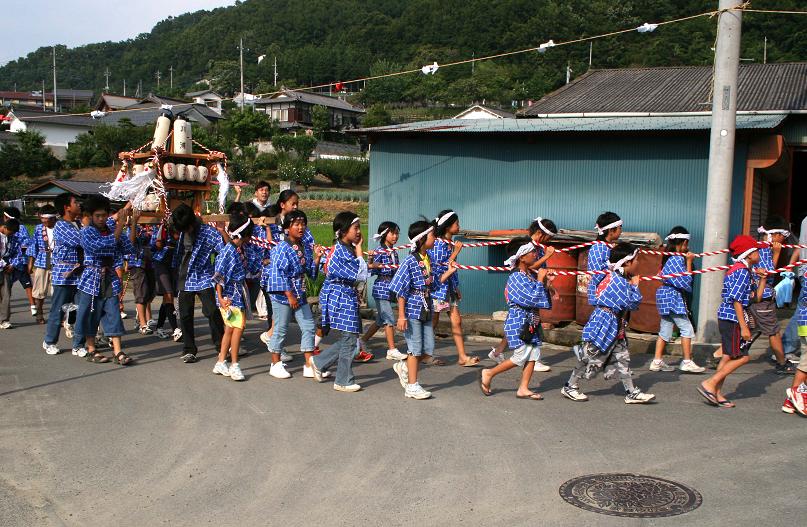
(Children Carrying a Portable Shrine at Rural Festival)


(Harvesting Rice)

Tuesday, October 31, 2006

What Is the Most Popular Rice in Japan?

The Japanese live on rice. There are a lot of varieties of rice. The most popular variety is Koshihikari, because it is very delicious. Koshihikari was developed by marrying Norin-Ichigo (=No.1), which had a tasty characteristic, and Norin-Nijunigo (=No.22), which had a good quality characteristic. It was married in Niigata in 1944, cultivated in Fukui, registered as Norin-Hyakugo (=No.100), and then adopted as recommended variety in Niigata in 1956. It has had a stormy life. The planted area of Koshihikari is the largest in Japan, occupying about 40 % (in 2004).

My relative liked Koshihikari and had sent for well-known brand Uonuma Koshihikari; at my home, we eat Hitomebore, which is a child of Koshihikari and cheaper. According to the yesterday’s paper, Niigata is considering the reduction of the production of Koshihikari because of the decrease of the need. It is said that Koshihikari is not easy to cultivate. I would like the foreign people to eat delicious Japanese rice. Anyway try to eat Koshihikari.

Yesterday I saw kakashi, which is set to prevent birds from picking rice.


Wednesday, October 25, 2006

A Young Man at Rice Field and Abduction Victims

The other day I went to the rice field to see how it was. Cropping has been done and now drying was going on.

Then I happened to see a young man resting at the irrigation ditch. He looked contented very much; I asked to take a picture. He said he liked rice fields and this place was his favorite jogging course.

We had some chat. After this he was going to attend a meeting to support Mr. and Mrs. Yokota. He liked photography and he wanted to present the picture of beautiful blue sky he had taken before. But he wondered whether he should present it. So, I advised to do it if he hesitated. I wonder how he did.....

Mr. and Mrs. Yokota are the parents of Megumi Yokota, an abduction victim of North Korea. They have been fighting as a leader for having abduction victims back. The abductions by North Korea are unforgivable state crimes. I hope all the victims will be taken back to Japan without further delay.

Photo Exhibition by Shigeru Yokota, which was held at many places throughout Japan to appeal to people, is now accessible on the Internet. We will be able to feel to some extent a 30-year suffering of the family separated by abduction. URL is:

http://asagaonokai.jp/eg/vre/index.html


(After jogging)

(Drying Rice)

(Taking a Rest at Neighboring Field)

Tuesday, September 19, 2006

Today's Sky

Today I had expected a blue sky just after typhoon, but quite cloudy. After I went to see how the rice fields were, I went to Enoshima. Enoshima is one of my favorite places.

Enoshima is a small island located in the south of Kanagawa prefecture and connected to the main land with a road bridge. As it was windy, there were a few visitors. I have relaxed, seeing seagulls flying in the sky.


(Sky over the Rice Field)

(Harbor Light at Enoshima)

(Flying Seagulls)

Friday, August 04, 2006

I Can't Wait for Ear Emergence!

When I arrived at the rice field, I happened to see a farmer who is a member of K family. He said we would be able to see ear emergence around Obon (August 12 to 16). He also said the neighboring two fields were damaged by rice blast and that one of the causes was that they used groundwater directly without storing water for warm up.
(Today's Rice Field)
(Close-up)

(Damage by Rice Blast)
When I visited last week, I found a rice field was covered with orange nets. I had heard that the rice planting had taken place at the field first this year and the planted brand was “Koshihikari (meaning light of Koshi (=Niigata Prefecture))” that was a famous brand in Japan. Today I have found ear emergence all over the field. Dragonflies were flying freely.
At home we have “Hitomebore (meaning love at the first sight)” which is a closely-related variety of Koshihikari and cheaper than Koshihikari.

(Dragonflies Flying over the Rice Field)

(Ear Emergence of Koshihikari)

Sunday, July 30, 2006

Rice Is Thriving In.

On Wednesday I visited the rice field to see how it is. The length was more than 60 cm. This year the rainy season lasts more than usual and there is a special concern about the lack of sunlight. The end of the rainy season was announced in the western part of Japan; it will be done soon also in the eastern part of Japan.

Near the rice field a farmer was selling fresh vegetables, so I bought a tomato and took bites out of a whole tomato. There was no freshly-picked green scent. I was disappointed. My grandfather used to grow vegetables for my family after retirement. He organically grew various vegetables such as cabbage, eggplant, cucumber, tomato, pea, green onion, and green chive. I used to help to pick up budworms from cabbages. I feel nostalgic for my grandpa’s tomato.


Wednesday, June 28, 2006

Rice Is Growing!

Today’s paddy field is very quiet and rice is growing to 25 - 30 cm. Only the Sun was gazing out benevolently.


Monday, May 29, 2006

Rice Planting by Hand

I will show a picture of rice planting by hand, as I promised. When I visited Oshino Village, I happened to see them planting young rice plants. They were about to take a rest, but I asked to allow me to take pictures of them. I took several shots quickly. Most farmers use a rice planter. Only at small paddy fields and terrace paddy fields, they plant rice by hand.

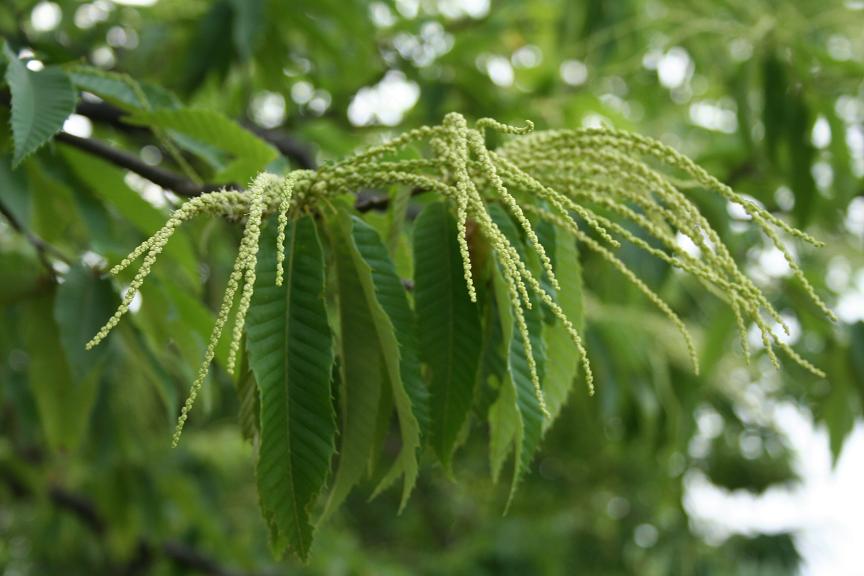
When I took a walk today, I found the following flowers. Do you know the name of the flowers?


The Answer is [Chestnut]

It was the first time I saw the flowers of chestnut.

Tuesday, May 23, 2006

Rice Growing and Irrigation Canal

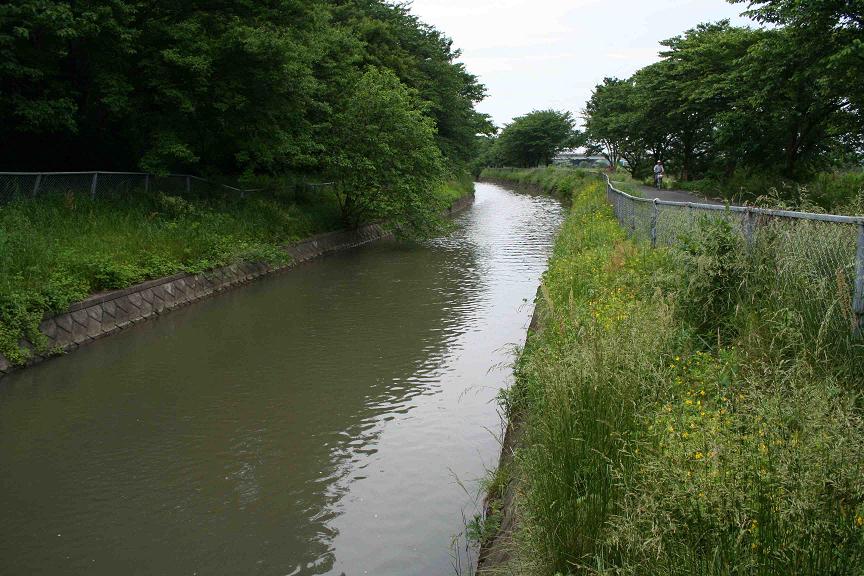
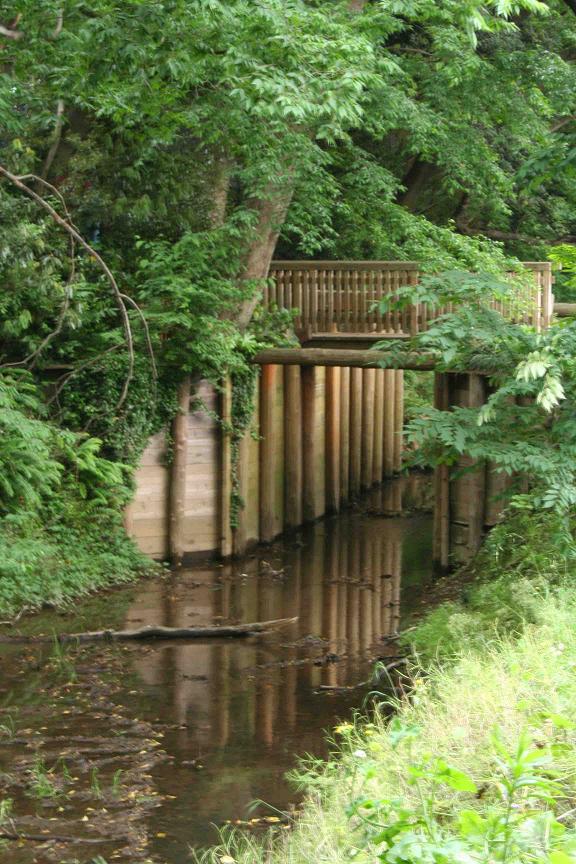
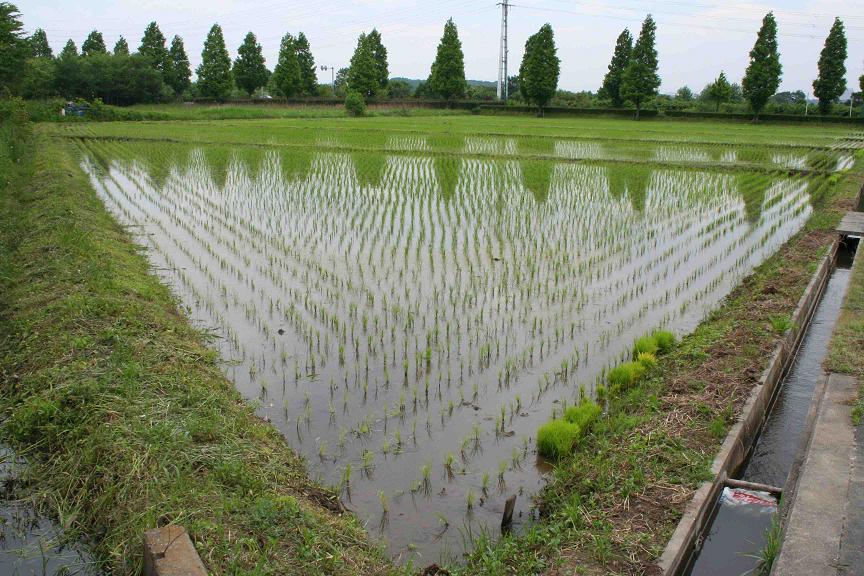
There are a lot of farmhouses in the suburbs of Tokyo. I went to the southern part of Saitama prefecture to see the paddy fields and the irrigation canals. Two canals, East and West, run north-south. They were built during Edo period and water was led from the Tone River, the second longest river in Japan. Canals were also used to run the boats carrying rice to Edo (Tokyo). They were called Tsusenbori. They show the high level of irrigation technology.

(Minuma Irrigation Canal)

(Remains of Tsusenbori)


(Paddy Field)

Monday, May 22, 2006

Rice Planting Done

Rice Planting on the farmer’s paddy field has been done as he had said the other day. Perhaps I think he used a rice planter. I saw some farmers doing rice planting without using a machine at Oshino village. I think I can show you the pictures tomorrow.


Friday, May 12, 2006

Rice-Planting Season

The Japanese live on rice. Children are brought up not to leave any rice in their bowl. Rice fields are seen throughout Japan. A farmer I happened to meet today said that rice planting used to be carried out in June, but recently it was done during May. It is because they grow rice of early season cultivar, which reduces the risk of the damage due to typhoon. The farmers were preparing for rice planting scheduled on next weekend.
I saw butterflies and a dragonfly.